
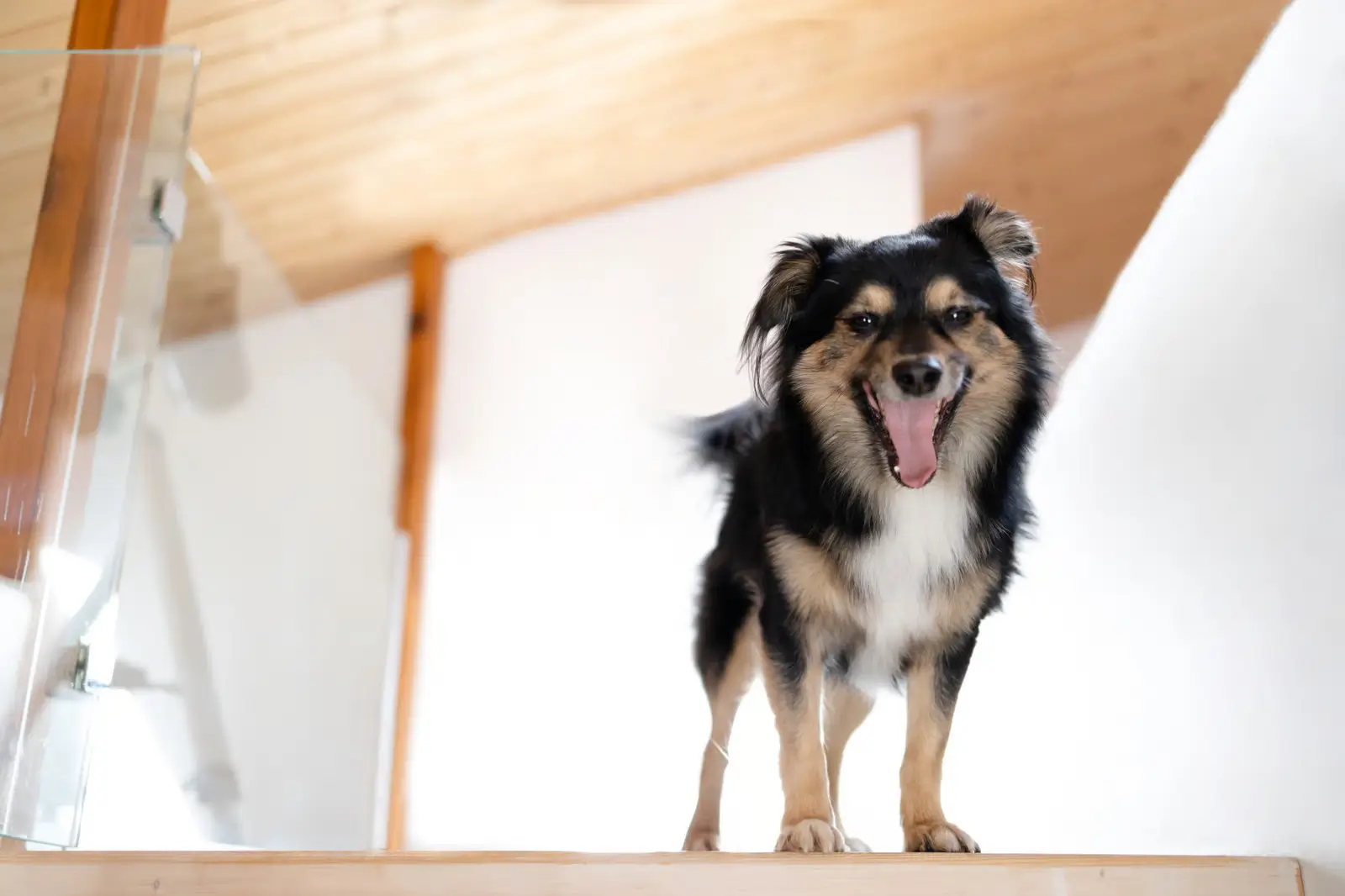
Watching your older dog pause at the bottom of the stairs is tough, because it is one of those quiet moments that tells you something has changed. Maybe they used to follow you without thinking, and now they stop, shift their weight, and look unsure.
That hesitation matters. It does not mean disaster, but it often means the stairs no longer feel steady or comfortable.
You do not need to push your dog through it. With a few practical changes, you can make moving around feel easier again, so your dog can keep doing the small, everyday things they enjoy.
Why stairs get harder with age
Stairs ask more of your dog than flat ground. Each step means lifting higher, shifting weight forward, and balancing on a narrow surface. When joints are sore or muscles are weaker, that extra effort adds up.
Many older dogs develop joint pain, often from osteoarthritis, and it can make climbing uncomfortable. Others struggle because their back hurts, their hips feel unstable, or their strength is not what it used to be. Some dogs become less sure-footed as their senses change, especially in low light where edges are harder to judge.
You do not have to figure out the exact cause at home. What matters is responding early, before a slip turns into a scare.
Signs your dog needs help on the stairs
Sometimes the change is obvious, like refusing the stairs completely. More often, it shows up as small behavior shifts that slowly become the new normal.
You might notice your dog pausing before the first step, taking stairs one at a time, leaning into the wall, or turning sideways as if they are trying to make each step smaller. Some dogs can go up but struggle going down. Others avoid the stairs mostly at night, when the house is darker and they feel less sure.
Watch for patterns like these:
- Hesitating at the top or bottom
- Slipping, scrambling, or losing footing
- Moving unusually slowly with a tense posture
- Limping or stiffness afterward
- Avoiding the couch, bed, or car when they used to jump up easily
If your dog yelps, suddenly cannot use a leg, collapses, becomes weak very quickly, drags their back legs, or seems distressed, call your vet right away. Those are not typical aging moments.
Make your existing stairs safer first
Many people jump straight to ramps or pet stairs, but you can often help a lot by improving the staircase you already have.
Traction is the biggest issue in most homes. If the stairs are smooth wood or slick laminate, your dog may not trust their paws. A runner or stair treads can add grip and reduce fear. Make sure whatever you add sits flat and stays put, because a shifting rug can make things worse.
Lighting helps too. A small night light near the stairs can reduce missteps, especially for dogs who are less confident in dim conditions.
If your dog is struggling, it can also help to block the stairs when you cannot supervise. A simple gate can prevent a fall during a burst of excitement.
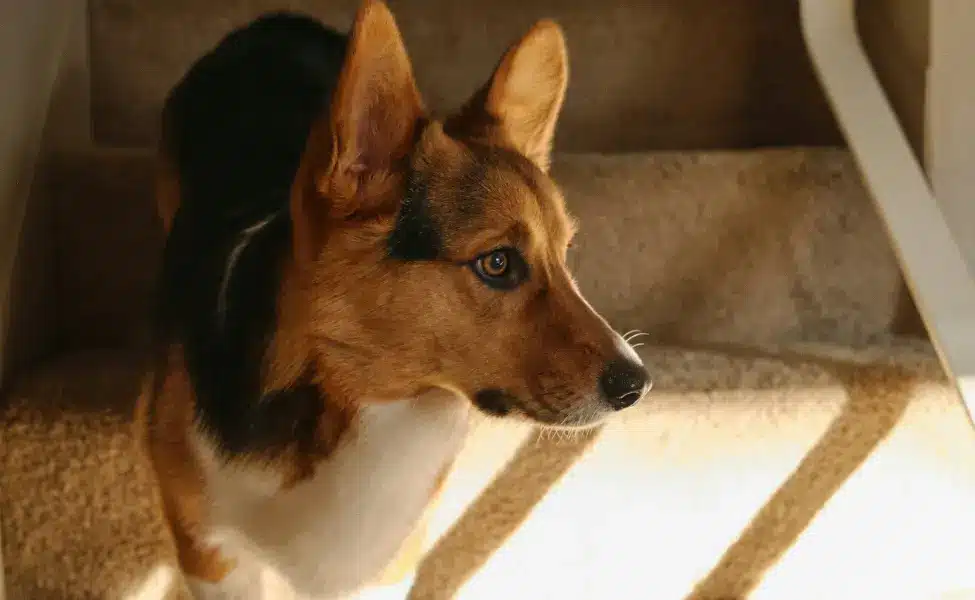
Choosing between a ramp, pet steps, or a support harness
There is no single best tool for every senior dog. The right choice depends on comfort, strength, confidence, and the space you have.
When a ramp is often the easiest option
Many dogs with sore joints prefer a ramp because it feels more like walking than climbing. It can work well for beds, couches, and car access.
Focus on three things: stability, grip, and slope. A ramp that wobbles or feels slippery is likely to be refused. A steep ramp can also feel just as intimidating as stairs. In general, a longer ramp creates a gentler climb, but it does take up more room.
When pet steps can work well
Steps can be a good fit when your dog can still lift their legs but struggles with jumping. They also make sense in tighter layouts where a ramp would stick out too far.
Look for steps that feel solid underfoot and have enough depth for your dog to place a paw without rushing. Wider, deeper steps tend to feel more secure, especially for medium and large dogs.
When a support harness is the kindest first move
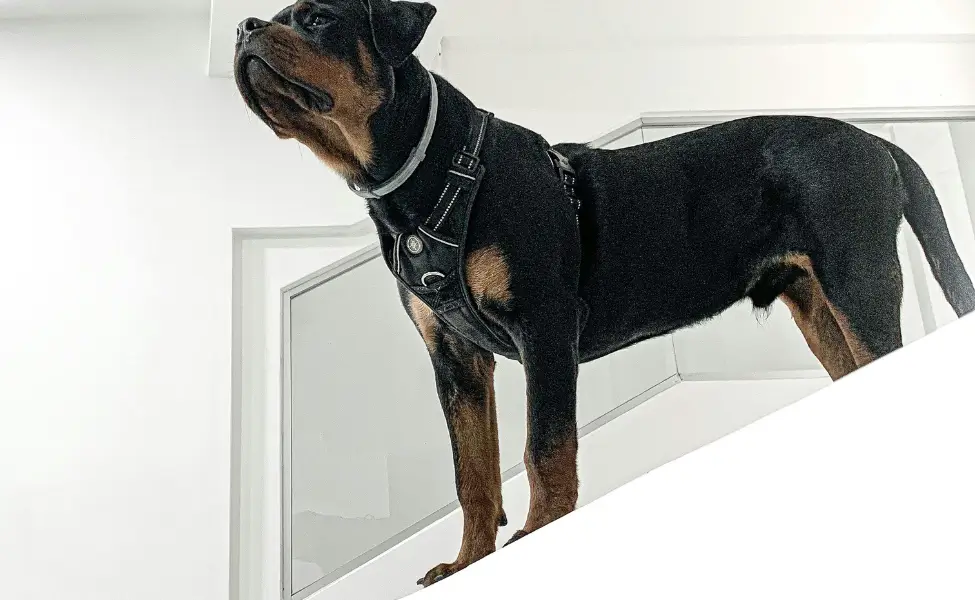
If your dog is wobbly, weak, or nervous, a support harness can help right away. It lets you steady them and share some of the load without awkward lifting. This can be especially useful on household stairs, outside steps, or any spot where balance is the main problem.
For some dogs, a harness is also a bridge. It keeps them steady while they learn to trust a ramp or steps.
Measure first so you do not waste money
A lot of frustration comes from buying equipment that does not match the space.
Measure the height your dog needs to reach, such as the top of the couch cushion or the vehicle floor. Then check how much clear space you have in front of that spot.
If you are considering a ramp, remember that a gentler slope usually means more length, so you need enough “runway” for it to sit comfortably. If you are considering steps, make sure the base will not wobble and that the unit will not shift when your dog turns around.
If your dog is large or unsteady, choose sturdiness over convenience. A slightly heavier option that feels solid is usually the safer pick.
What to look for in safe equipment
Ignore most marketing claims and focus on a few basics.
Your dog needs real traction. They should be able to place their paws without sliding, even if they step slightly off center.
Stability matters just as much. If the ramp or steps wobble when you press down with your hand, your dog will notice and may back away.
Raised edges can help some dogs feel guided, especially while learning, and they can also help dogs whose vision is not as sharp. They are not required, but they can add confidence.
Finally, choose a weight rating that is comfortably above your dog’s weight. Do not cut it close.
Teaching your dog to use a ramp or steps without stress
Older dogs can learn new equipment, but the process needs to stay calm.
If possible, start with the ramp or steps on flat ground. Let your dog sniff it and explore. Reward curiosity, then reward a single paw on it, then two paws. You are building trust one easy win at a time.
Avoid pushing, pulling, or dragging your dog onto the equipment. That often creates fear, and fear is what makes refusal stick. Keep practice gentle, use treats your dog truly cares about, and stop while things are going well.
Practice when your dog is moving comfortably, which is often after a short walk around the house rather than right after a long nap. If your dog seems sore or hesitant, lower the difficulty by reducing the slope, improving grip, or moving the setup to a less stressful spot.
If your dog still refuses, do not treat it as stubbornness. Usually something about the setup does not feel safe to them. Sometimes the simplest fix is switching from a ramp to short steps, or the other way around.
If ramps and steps are not realistic, use a home workaround
Some homes have tight layouts. Some dogs will not accept new equipment. You still have options.
You can move your dog’s favorite resting spot to the main floor, so stairs are not part of their day. You can block the staircase and create a comfortable “everything is here” area with food, water, and bedding nearby. If the car is the main issue, a support harness and a controlled lift may be safer than struggling with a steep ramp in a cramped space.
You are not aiming for perfection. You are aiming for fewer slips, less strain, and a calmer routine.
A small change that can bring back confidence
Most senior dogs are not attached to stairs. They care about being near you, reaching their favorite sunny spot, and getting to bed without pain or fear.
When moving around feels steady again, it often shows up in small ways. Your dog walks more freely, settles more easily, and looks less worried about the next step. That is the outcome you are working toward, and it is very achievable with the right setup.